

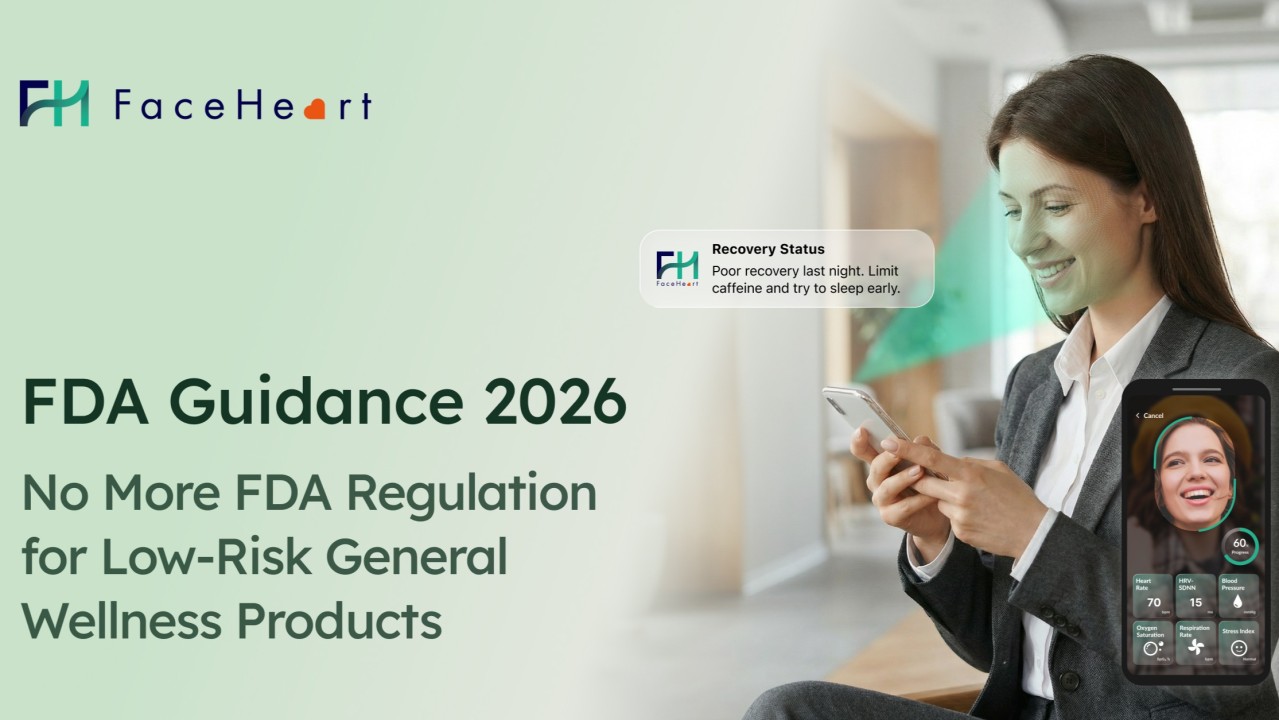
FDA just released a new guideline that explains the exclusion of certain general wellness functions from the definition of device in section 201(h) of the FD&C Act.
Low-Risk General Wellness Products Fall Outside the Scope of FDA Medical Device Definition
On January 6, the U.S. Food and Drug Administration (FDA) clarified the exclusion of regulation of low-risk general wellness products in healthcare. The FDA confirmed that these products are not regulated as medical devices when they are only intended to support a healthy lifestyle, do not claim to diagnose or treat diseases, and pose minimal risk to users.
The FDA’s Center for Devices and Radiological Health (CDRH) defines general wellness products as “tools that promote overall health,” such as encouraging better sleep, balanced nutrition, or physical activity, without referencing specific diseases. Even products that estimate physiological signals like blood pressure (BP) or heart rate variability (HRV) may fall into this category if they are used for wellness purposes and not for clinical decision-making. This update provides important clarity for companies building consumer health technologies and opens the door for more innovation in everyday wellness solutions.

A Turning Point for Consumer Health Technologies
This guidance is especially important for companies building consumer-focused wellness technologies. The FDA notes that non-invasive products including wearables and optical sensors can be positioned as general wellness products on the condition that their intended use, product claims, and marketing materials stay focused on lifestyle and wellness benefits.
These products should NOT claim medical or clinical accuracy, diagnose conditions, or manage diseases. Even when suggesting that users consult a healthcare professional, the product cannot label results as abnormal, diagnostic, or provide ongoing alerts for disease management.
With regard to software products, the FDA draws a clear line between regulated software as a medical device and general wellness software. From now on, Consumer Health companies should carefully evaluate how the product is positioned, what it claims, and how users experience it.
Low-risk general wellness products may now leverage innovative technologies to promote a healthy lifestyle or encourage healthy choices. However, once a product includes disqualifying features, such as claims of medical-grade or diagnostic thresholds that characterize outputs as abnormal, it becomes a regulated device and falls outside the scope of this compliance policy.

FaceHeart Vitals™: Empowering Everyday Health with FDA-Cleared Accuracy
Versatile Wellness Integration via Optical Sensing
Utilizing non-invasive rPPG technology, FaceHeart Vitals™ offers a seamless solution for the general wellness. It aligns with the FDA’s 2026 compliance policy for optical sensors, which allows low-risk products to encourage healthy choices without the need for premarket review. With a quick 50-second facial scan, FaceHeart Vitals™ is well suited for general wellness products to support healthy lifestyle choices and everyday health awareness without medical device regulatory burden.
Bridging Wellness and Regulated Medical Applications
While FaceHeart Vitals™ supports general health, FaceHeart has successfully obtained two FDA 510(k) clearances for FaceHeart Vitals™ (registered as FH Vitals SDK) as a Class II SaMD (Software as a Medical Device) prior to the General Wellness guidance issued by the FDA on January 6, 2026. This allows FaceHeart’s technology to go beyond wellness by providing data for medical management and the estimation of cardiovascular risks within established regulatory frameworks. FaceHeart will continue to conduct clinical trials and pursue further FDA approvals across all vital signs, advancing FaceHeart Vitals™ toward full compliance with medical device standards.
Precision through Validated, FDA-Cleared Solutions
Precision is the cornerstone of any effective health management. Unlike standard wellness tools that may lack clinical rigor, FaceHeart Vitals™ delivers validated measurements, including heart rate and respiratory rate, that aligned with those used in clinical settings. By choosing FaceHeart’s FDA-cleared solution, both professionals and individuals gain access to medical-grade accuracy supported by resilient research/development and clinical trials. FaceHeart remains committed to providing trustworthy, evidence-based data for proactive and preventive healthcare, now and always.
Contact us to explore how FaceHeart can support your wellness product: https://faceheart.com/contact.php