

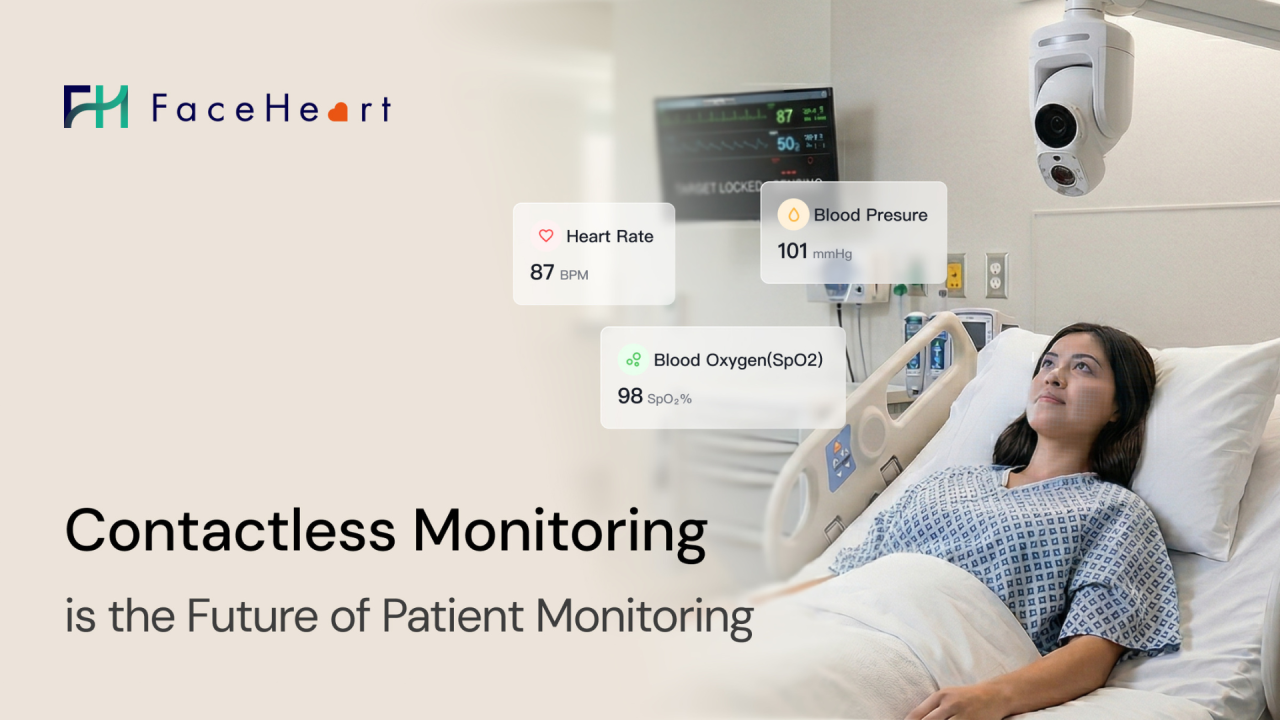
Healthcare Is Hitting a Turning Point
For decades, patient monitoring meant one thing: patches, sensors, and bulky devices found only in hospitals.
Today, everything is changing.
Software-driven medical tools, especially contactless, camera-based vital-sign measurement, are redefining how we track health trends and detect abnormalities. This shift isn’t just about convenience. It’s about expanding care to anyone, anywhere, with nothing more than a camera on a smartphone.
Let’s break down what’s driving this transformation.
What is Patient Monitoring and Why It Matters
Patient monitoring refers to continuously tracking a patient’s vital signs to catch early signs of health deterioration, enabling timely intervention. It’s a cornerstone in ICUs, operating rooms, and emergency settings, but it’s gaining traction in telehealth and home care.
Traditional monitoring devices come in various forms: bedside units in hospitals, handheld devices for mobile care, and wearable monitors for long-term tracking. All typically require physical sensors and integration with software to store and analyze data.
But with rising demand for telehealth, home care, and workplace wellness, the need for accessible, scalable monitoring tools has never been greater.

Enter Video-Based Vital Sign Measurement: A Game Changer
Imagine measuring your vitals by simply looking at a camera for 50 seconds.
No wristbands. No cuffs. No patches.
That’s exactly what next-generation solutions like FaceHeart Vitals™ deliver using advanced rPPG (remote photoplethysmography). A standard camera captures subtle changes in facial blood flow to estimate multiple vital signs — completely contact-free.
Why this matters:
- No special hardware — compatible with laptops, tablets, and smartphones
- Comfortable & accessible — perfect for elderly users, chronic care, and rural communities
- Scalable — can be integrated into hospitals, clinics, corporate wellness programs, telehealth platforms, and more
As care models evolve in telehealth, home care, and aging populations, such innovations will likely become a new standard for proactive, preventive, and personalized health management.

For Clinics & Hospitals
- Real-time alerts reduce response times
- Lower workload and fewer manual errors
- Continuous tracking supports better clinical decisions
For At-Home Care & Long-Term Monitoring
- Ideal for chronic diseases, post-operative recovery, and aging-in-place
- Reduces unnecessary visits and hospital readmissions
For Employers & Insurers
- Enables scalable wellness checks and preventive care
- Supports risk assessment and early detection programs
The Rise of SaMD in Modern Healthcare
Software as a Medical Device (SaMD) is rapidly reshaping how healthcare is delivered. By shifting vital capabilities from hardware to software, SaMD enables faster innovation, easier updates, and broader accessibility, often using devices people already own. This evolution supports the growing demand for remote monitoring, telehealth, and preventive care, making advanced diagnostics more scalable and patient-friendly.
Regulators worldwide are recognizing the value of medical software. As regulatory pathways mature and AI-driven solutions gain validation, SaMD is becoming a foundational element of modern, connected healthcare.
Healthcare is no longer limited by devices. It’s being unlocked by software.Healthcare is no longer limited by devices. It’s being unlocked by software.

A New Standard of Care Is Emerging
As healthcare shifts toward preventive, personalized, and remote-first models, contactless vital-sign monitoring will move from “nice-to-have” to “must-have.”
The organizations that embrace this technology early, including hospitals, employers, insurers, and care providers, will be better positioned to deliver smarter, more inclusive healthcare.
Want to integrate AI-driven contactless monitoring solution into your services?
Connect with us to get started [email protected]