


Blood pressure measurement is not just about getting a number. The real goal is to follow the right process so your readings are consistent, trackable, and useful for clinical interpretation. If the method is inconsistent, even a reliable home blood pressure monitor can produce readings that vary widely, making it harder to manage health conditions or give a healthcare provider actionable data.
Here is the key point. The most important part of blood pressure measurement is not a single reading, but consistency in timing, posture, device, and recordkeeping. For most people, blood pressure monitoring is a basic part of home health management. For digital health services, it is a key component of remote care, vital sign tracking, and broader health management workflows. For related reading, see Remote Vital Signs Monitoring.
What Is Blood Pressure Measurement?
Blood pressure measurement checks the force of blood pushing against the walls of your arteries. The result appears as two numbers; the top number reflects pressure when the heart contracts, and the bottom number reflects pressure when the heart relaxes.
Blood pressure is not a fixed number. It can be influenced by factors such as emotions, posture, physical activity, sleep, caffeine, smoking, medications, and even by how the measurement is taken. This is why readings often vary at different times. Rather than focusing on a single reading, it’s more meaningful to measure blood pressure consistently under similar conditions and observe how it changes over time. Regular monitoring helps you understand the overall trend, instead of relying on a single reading.
For this reason, blood pressure measurement should not be treated as a small home device task. It is part of an ongoing health monitoring process. What you are measuring is not just a single result, but a snapshot of your body’s condition over time.
Why Is Blood Pressure Measurement Important, and Who Should Pay Close Attention?
Blood pressure measurement matters because it can help detect risk early, track treatment progress, and reduce reliance on subjective symptoms.
Many people with elevated blood pressure do not experience obvious symptoms. That is why waiting until symptoms such as headaches, chest discomfort, or dizziness appear can be risky. Regular monitoring is especially important for:
- People who have been diagnosed with high blood pressure
- People taking blood pressure medication
- People with diabetes, kidney disease, or cardiovascular risk factors
- Older adults
- People with a family history of high blood pressure
- Pregnant individuals who need blood pressure monitoring
For these groups, blood pressure is not just a reference point. It directly affects lifestyle changes, follow-up care, and long-term health decisions.
Why Is Blood Pressure Measurement No Longer Limited to Traditional Home Monitors?
Blood pressure measurement is no longer just about using one device. It is increasingly connected to home care, remote health services, smart devices, and broader vital sign management.
Traditional blood pressure monitors usually require specific timing, proper posture, and manual recording of results, which makes it difficult for many people to stay consistent over time.
Health management is shifting toward continuous tracking. Blood pressure is no longer can be assessed with a single reading—it is more meaningful when viewed alongside other vital signs such as heart rate, respiratory rate, and sleep quality to build a complete picture of overall health.
As a result, blood pressure monitoring is increasingly integrated with home care and remote health solutions. This includes using smart devices to automatically record data and reducing the effort required for measurement in daily life. Technologies such as Contactless Vital Sign Measurement are also emerging, enabling users to monitor their health without the need for wearables or manual operation.
What Are the Current Trends in Blood Pressure Measurement?
Blood pressure management is moving from single-point readings toward home monitoring, remote tracking, and integration with multiple vital signs.
In the past, many people only had their blood pressure checked in clinics, health screening centers, or pharmacies. Today, regular home measurement and long-term data tracking are more common. Several key changes are driving this shift.
1. Home monitoring can be more useful than a single clinic reading
A single clinic reading may be affected by nervousness or anxiety, while home readings often reflect a person’s usual condition more accurately.
2. Health management is focusing more on continuous data
The goal is not limited to a single measurement, but to observe changes over a week, a month, or a defined period.
3. Vital sign monitoring is becoming more integrated
Blood pressure is no longer assessed in isolation. It is typically considered along with indicators such as heart rate, respiratory rate, blood oxygen, and stress levels.
4. Health technology is reducing friction in the measurement process
In addition to traditional blood pressure monitors, there is growing interest in vital sign measurement methods that are easier to integrate into daily life. For a broader view of this trend, see Mobile Health.
What Are the Most Common Use Cases for Blood Pressure Measurement?
The most common use cases are routine health checks, home follow-up, clinic evaluation, and remote care management.
Routine health checks
Many people first discover elevated blood pressure during a health check, at a pharmacy kiosk, or at a company screening. In this situation, the most important step is not to self-diagnose, but to arrange consistent follow-up monitoring.
Home follow-up
This is the most practical and common use case. For people with elevated blood pressure, those on medication, or those tracking the impact of lifestyle changes, home monitoring provides the most actionable data.
Clinic evaluation
Some people feel nervous in medical settings, which can push readings higher than usual. In these cases, a series of home readings is often more useful than a single office measurement.
Remote care and digital health
More health services now incorporate blood pressure measurement as part of a broader monitoring platform and review it alongside other vital signs. This integrated approach is closely aligned with the concept of Patient Monitoring.
What Blood Pressure Range Is Considered Normal?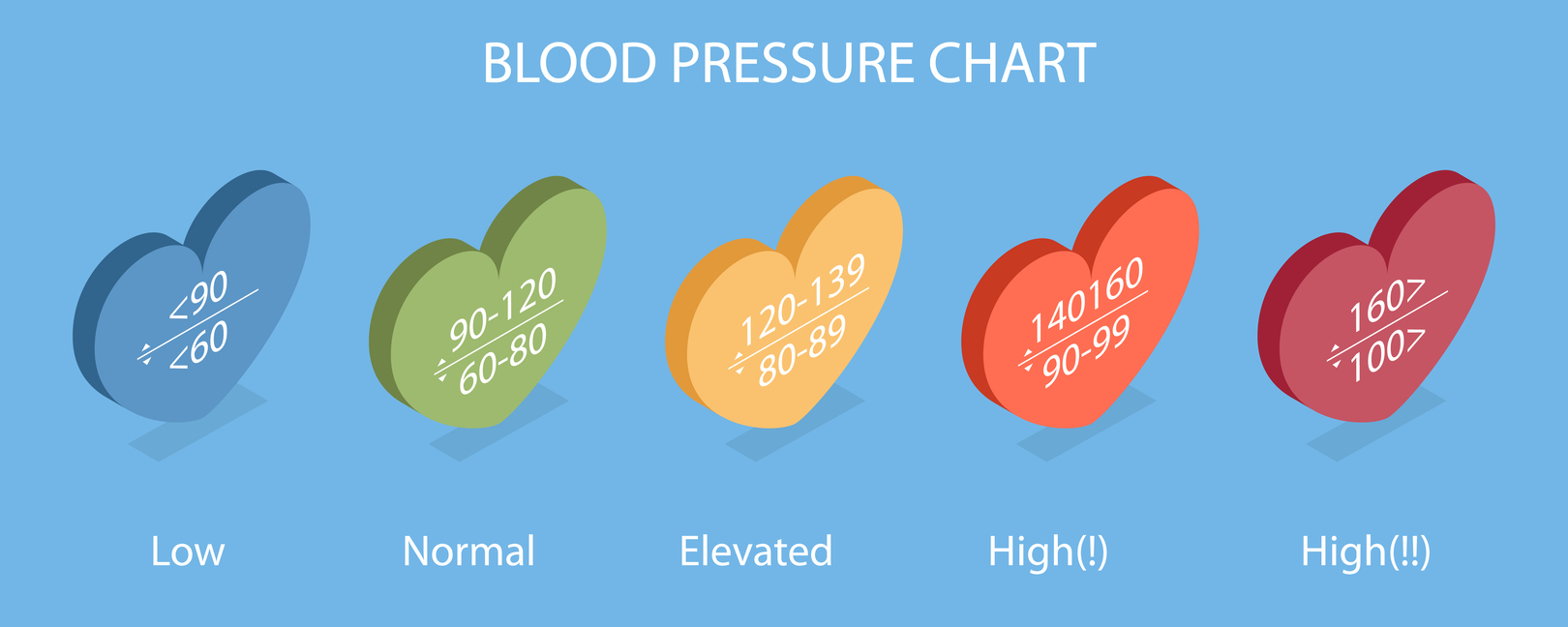
Ideal blood pressure is typically below 120/80, but it should not be judged based on a single reading or without considering how and when the measurement was taken.
A simple way to think about it is this:
|
Situation |
How to interpret it |
|
One slightly high reading |
Rest and recheck before drawing conclusions |
|
Repeated high readings over several days |
Consider a medical evaluation |
|
Frequent high readings while on medication |
Discuss possible adjustments with a clinician |
|
Very high reading with symptoms |
Seek medical care immediately |
A common mistake is judging blood pressure based on a single reading. Instead, it should be evaluated over multiple measurements taken under similar conditions, since trends over time give a more accurate picture of overall health.
How Should You Prepare Before Measuring Blood Pressure?
For an accurate blood pressure reading, stay relaxed and at rest. Don’t measure right after exercise, caffeine, smoking, stress, or while talking or needing to use the bathroom.
Use this quick checklist:
- You have not just exercised, climbed stairs, or done physical chores
- You have not had strong coffee, tea, or an energy drink recently
- You have not just smoked
- You have been sitting quietly for at least 5 minutes
- You are not talking during the measurement
- Your arm is free of thick clothing for the cuff
- You feel calm and not rushed
Many people think their blood pressure readings are inconsistent because of the device, but the issue is often how the measurement is taken. The same applies to other vital signs, all aiming for consistent measuring conditions to lead to more reliable results.
How Do You Measure Blood Pressure Correctly at Home?
To get accurate blood pressure readings at home, be consistent with when and how you measure. Use the same posture and routine, and take two readings each time.
Follow this process:
- Sit in a quiet and comfortable place.
- Keep your back supported and both feet flat on the floor without crossing your legs.
- Sit and rest quietly for 5 minutes.
- Place the cuff on your upper arm as instructed
- Rest your arm on a table at about heart level
- Start the measurement and do not talk.
- Record the reading and the time.
- Wait about 1 minute, then take a second reading.
To make your readings easier to compare, check your blood pressure at the same time each day, such as in the morning and before bed. It is not that these times are the only valid times, but they are easier to keep consistent.
How to Choose a Blood Pressure Monitor: Upper Arm vs Wrist vs Manual monitor
For most people at home, an automatic upper-arm monitor is the best choice. Wrist monitors are more sensitive to posture and are better suited for specific situations.
Here is a quick comparison:
|
Type |
Automatic upper-arm monitor |
Wrist monitor |
Manual monitor |
|
Advantages |
Easy to use, more stable in daily routine use |
Compact and portable |
Can be highly accurate in trained hands |
|
Limitations |
Cuff size matters |
Incorrect positioning can affect readings |
Difficult for most people to use correctly alone |
|
Best for |
Most users at home |
People who need portability |
Medical professionals or trained users |
If you want to track your blood pressure over time, an upper-arm monitor is usually the easiest and most practical to use. Besides prices, consider cuff size, screen clarity, and whether it’s easy for older family members to operate.
If the monitoring context goes beyond home use and into broader home care workflows, you may also want to explore A Smart Home Health Care.
What Are the Most Common Risks and Pain Points in Blood Pressure Measurement?
The main issue isn’t that people do not know how to measure their blood pressure, but it is that they think they are doing it correctly when they are not.
These common situations can affect your blood pressure readings:
- Inconsistent measurement timing: Measuring at different times, such as morning one day and night the next, makes comparisons unreliable
- Not being relaxed: Talking, using a phone, or feeling stressed can change readings.
- Incorrect posture: Arm not properly supported, placed on your lap or hanging down
- Wrong equipment: Incorrect cuff size can lead to an inaccurate result
- Additional variables: Re-measuring repeatedly after a high reading may increase anxiety and affect the result
- Focusing on one single reading: Paying attention to a single abnormal value instead of overall trends can be misleading.
The more factors change when you measure blood pressure, the less reliable the results. Therefore, keeping measurement conditions consistent is key to making your blood pressure readings meaningful and reliable.
What Should You Do If Your Reading Is High?
If one reading is high, do not panic. A single high reading isn’t usually a cause for alarm. First, check you have measured correctly, take rest and try again. If the number is very high and you also feel unwell, do not just keep measuring at home, but get medical help.
High reading? You can recheck if . . .
- You just walked, climbed stairs, showered, or drank coffee
- You feel tense or anxious
- Your posture was clearly incorrect
- It happened only once and you have no symptoms
When should you arrange a medical follow-up?
- The readings stay high for several days
- Both morning and evening readings are high
- You are on medication, but your readings are still not stable
- You also have headaches, chest discomfort, palpitations, or blurred vision
When to get help right away
If your reading is very high and you have chest pain, trouble breathing, confusion, speech problems, or weakness, seek medical attention immediately instead of waiting at home.
How Do You Build a Useful Home Blood Pressure Monitoring Routine?
A useful home monitoring routine is not about measuring whenever you remember. It is about using the same device, the same schedule, and the same recording format.
A practical blood pressure routine:
- Use the same device each time
- Measure at consistent times, such as morning and evening
- Take two readings each time and record them
- Write down the date, time, any medication taken, and any symptoms
- Look at trends over several days or a week instead of focusing on a single number
Simple record example
|
Date |
Time |
1st reading |
2nd reading |
Notes |
|
3/23 |
7:00 AM |
136/84 |
132/82 |
Measured after waking up |
|
3/23 |
9:00 PM |
128/80 |
126/79 |
Measured 2 hours after dinner |
This kind of record helps a clinician quickly see whether the issue is occasional, ongoing, more common in the morning, or connected to daily routines. If you want to place blood pressure together with other vital signs in a broader health management workflow, see Remote Vital Signs Monitoring.
How Is Blood Pressure Measurement Related to Remote Vital Sign Monitoring?
Blood pressure measurement is one of the baselines of remote vital sign monitoring, but it does not capture the whole picture.
In remote health management, blood pressure is often reviewed alongside other indicators, such as:
- Heart rate
- Respiratory rate
- Oxygen saturation
- Stress levels
- Heart rate variability
In real-world health assessment, a single blood pressure reading is often not enough to fully reflect a person’s condition. Without additional context from other indicators, misinterpretation can easily occur.
As a result, modern health monitoring systems are increasingly moving toward data integration and long-term tracking. Blood pressure is no longer treated as a one-time measurement, but as part of a broader set of health data. This shift also influences product design, data management, and the development of related technologies and medical regulations (such as SaMD).
However, in clinical interpretation and medical decision-making, measurement methods and usage contexts still need to be clearly distinguished. Remote monitoring is primarily intended for daily tracking and supportive assessment, not as a replacement for clinical evaluation.
FAQ
1. Do I need to measure blood pressure every day?
It depends on the situation. If you do not have a history of high blood pressure that does not require continuous monitoring, daily measurement may not be necessary. However, if you have a high blood pressure condition, ,are currently taking new medication, have recently changed your lifestyle, or are advised to monitor daily, measuring at the same time everyday can be very helpful. What matters most is not the frequency itself, but consistency. If the timing keeps changing, the data becomes less accurate.
2. Is it better to do the measurement in the morning or at night?
There is no specific time that is more accurate. The key is to keep measurement conditions consistent. Many people choose after waking up and before bed because those times are easier to remember. If you measure after coffee one day, after a shower the next, and right before bed on another day, the results will be harder to compare. For most people, measuring at two consistent and repeatable times is more useful than trying to find one perfect time.
3. Can I use a wrist blood pressure monitor?
Yes, but posture matters the most. Wrist monitors are portable and convenient, but if the wrist is not positioned close to heart level, the reading may be less reliable. So wrist monitors are not necessarily wrong, but they are highly sensitive to posture and require more consistent technique. If a senior is the main user, or if you want stable long-term tracking, an upper-arm monitor is preffered for clinical accuracy.
4. If one reading is high, does that mean I have high blood pressure?
Not necessarily. One elevated reading does not automatically mean you have hypertension. You may have just exercised, had caffeine, felt stressed, or had a poor posture during the measurement. A better approach is to rest, check your setup, and measure again, then observe whether the readings stay high over the next several days. Diagnosis depends on patterns and professional assessment, not only from a single momentary reading.
5. If I measure multiple times, will the average be more accurate?
Usually, it is more accurate to measure multiple times than to rely on a single reading, but only if the process is correct. If you become anxious after seeing one high number and then measure five or six more times, the results may become less stable. A practical approach is to take two readings about one minute apart and add a third reading only if needed. The goal is not to measure many times, but to measure under similar conditions so the readings can be compared.
6. How is blood pressure measurement connected to remote health management?
Blood pressure is one of the most common baseline indicators used in remote health management because it’s easy to measure and informative. When health services move from one-time measurements to continuous, long-term tracking, blood pressure data becomes part of a broader picture that includes other vital signs, patient status, and allows care providers to identify trends and assess treatment more accurately. This kind of integrated model is also part of the continuing growth of digital health and mobile health.
7. How is blood pressure measurement used in contactless vital sign monitoring?
Blood pressure measurement and contactless vital sign monitoring complement each other in remote health management. Blood pressure is one of the baselines used for diagnosis and treatment. However, traditional blood pressure measurement primarily relies on cuff-based devices and is typically taken at specific moments in time. As health management moves toward digitalization and remote care, vital sign monitoring is increasingly being integrated into smartphones, cameras, smart devices, and home environments, which enables accessible tracking of vital signs. It adds continuous context between readings, making health monitoring more convenient, consistent, and actionable.
8. What else matters if blood pressure management is part of a digital health platform?
Beyond the measurement itself, blood pressure management requires careful data integration into clinical workflow, consistent data recording,, and minimal user burden. Follow-up mechanisms and connections to broader health monitoring modules are also important to provide a complete picture of patient health.
If the platform includes software features, remote monitoring, or medical use cases, data security becomes critical. These factors can ensure that the platform not only provides accurate data, but also gives actionable insights and safe patient care.
Conclusion: The Real Value of Blood Pressure Measurement Is Not Just Getting a Reading, but Getting One You Can Use
Blood pressure may look simple, but doing it correctly requires the right method. Choosing the right device, measuring at consistent times, maintaining proper posture, taking two readings each time, and recording results consistently are all more important than focusing on a single number.
If you occasionally get a high reading, start by improving the measurement process and then observe the trend over several days. If you already have high blood pressure, are on medication, or are experiencing unstable readings, organizing your records and reviewing them with a clinician is the key to making the data reliable.
Disclaimer: FaceHeart Vitals™ is not intended for diagnostic purposes. If you have any health concerns, please consult your healthcare provider.